Care basicsTM-15
How to Acclimate Fish: Matching Temperature and Water, Drip and Cup Method Steps and Timing, and Notes for Shrimp, Medaka and Goldfish
To acclimate fish, float the bag to match the temperature, then add tank water little by little. Give shrimp more time with the drip method.

In this article (16 sections)
- In short: how do you acclimate fish?
- What is acclimation, and how do temperature and water acclimation differ?
- What happens if you do not acclimate fish?
- How long do you float the bag to acclimate the temperature?
- How do you acclimate fish with the cup method?
- How do you do drip acclimation?
- How long does acclimation take in total?
- Why shouldn't bag water go into the tank?
- Why does shrimp acclimation take longer?
- Is acclimating medaka or goldfish different from tropical fish?
- Besides acclimation, what should you do on the day you bring fish home?
- What are common mistakes when acclimating fish?
- What terms come up with acclimation?
- What else goes with acclimation?
What are common questions about acclimating fish?6
- Sources
In short: how do you acclimate fish?
Float the bag to match the temperature, then add tank water little by little to get the animals used to the water. At the end, scoop out only the animals with a net and throw away the bag water.
Acclimation is the process of slowly moving animals from the shop's water to the water in your tank at home. Shop guides and manufacturers' guides both recommend it as the basic step when adding new animals.
The confusing part is time. Sources range from "30 minutes" to "1 hour" to "2 hours or more." It is easy to be unsure which one to follow.
What this article covers:
- The difference between temperature acclimation and water acclimation
- Steps for the cup method and the drip method
- How long it takes, and when to take longer
- Why bag water should not go into the tank
- Acclimating shrimp, medaka and goldfish
- What to do on the day you bring them home
First, a quick reference for this page. Choose how long to acclimate based on the animal and how different the water is.
| Situation | Temperature | Water | Method |
|---|---|---|---|
| Hardy small fish. Shop and home water are similar | Float the bag for about 30 minutes | Add water over about 30 minutes | Cup method |
| Shrimp, or fish sensitive to changing water | Float the bag for about 30 minutes | Drop by drop for about 40 to 60 minutes | Drip method |
| Shop and home water temperatures differ by more than 10°C | Slowly, a little at a time | 2 hours or more in total | Drip method |
The key point: the bigger the difference and the more delicate the animal, the longer acclimation should take.
What is acclimation, and how do temperature and water acclimation differ?
Acclimation has two parts: temperature acclimation and water acclimation. The first brings the water temperatures together, and the second gets the animals used to what is in the water.
| Temperature acclimation | Water acclimation | |
|---|---|---|
| What you match | Water temperature | pH (how acidic or alkaline the water is) and what is dissolved in the water |
| How | Float the closed bag in the tank | Add tank water little by little |
| Rough time | About 30 minutes | About 30 to 60 minutes. Longer for delicate animals |
| If you skip it | A sudden temperature change weakens them | A sudden change in the water weakens them |
It is hard to feel a temperature difference by hand. Floating the bag brings the water inside it close to the tank temperature.
What is in the water differs from shop to shop and from home to home. Acclimate in this order: match the temperature first, then get them used to what is in the water.
What happens if you do not acclimate fish?
Without acclimation, sudden changes in temperature or water can weaken the animals. A University of Florida guide says sudden temperature change puts heavy stress on fish.
The University of Florida (UF/IFAS) guide covers acclimation after fish are transported.
- In shipping water, carbon dioxide builds up and the pH tends to drop
- When temperature and pH rise, ammonia changes to a more harmful form
- Add tank water little by little to prevent sudden changes in temperature and pH
- When the temperature difference is large, take 2 hours or more
Tokyo Aqua Garden's guide also says skipping it can lead to weakness or disease. The effort of acclimation is insurance against weakening them right after they go in.
How long do you float the bag to acclimate the temperature?
Float the closed bag in the tank for about 30 minutes. GEX's guide says about 30 minutes, and Tokyo Aqua Garden says 30 minutes to 1 hour.
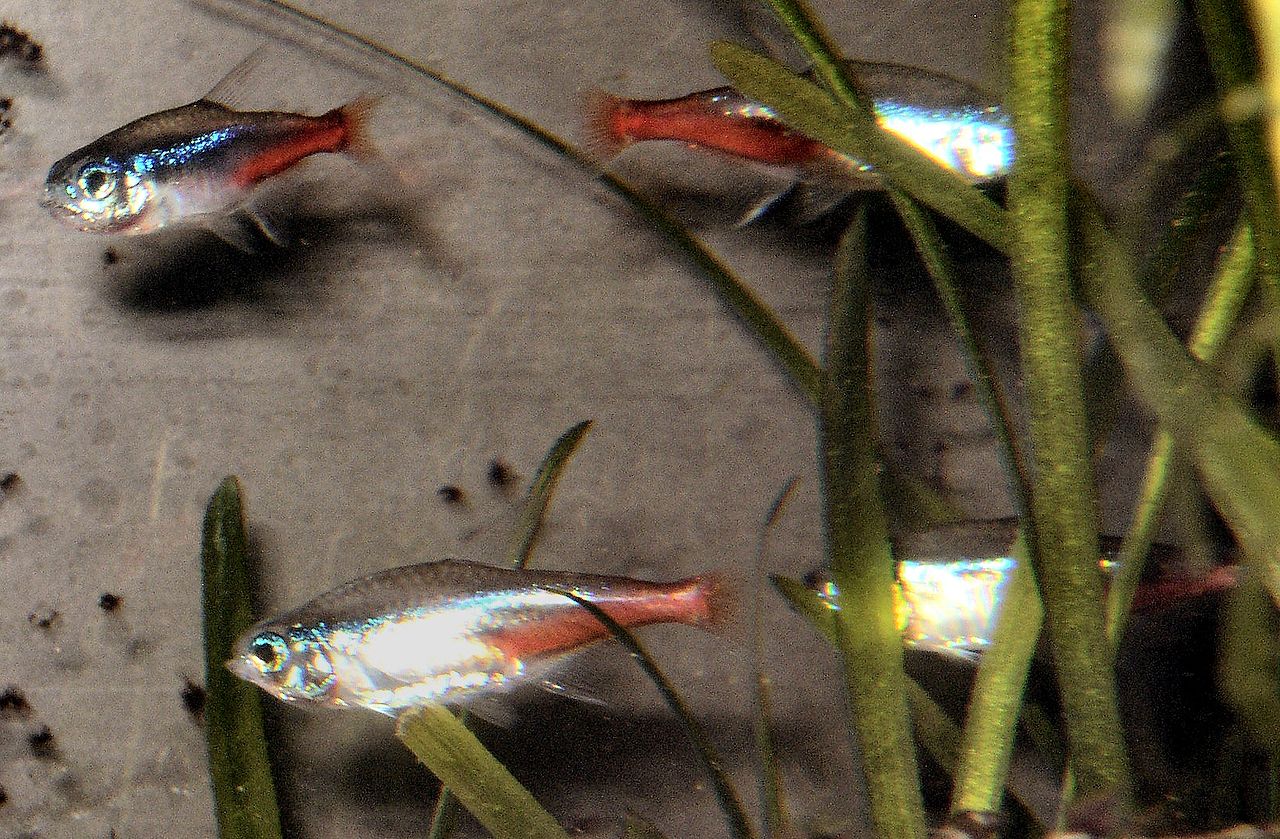
Steps for temperature acclimation:
- Turn off the tank light
- Float the closed bag on the water surface
- Move it to the edge so it does not sink or tip over
- Wait about 30 minutes so the water in the bag and the tank reach the same temperature
The US aquarium store Aquarium Co-Op says 10 to 15 minutes is enough if the bag stays closed. The goal is to match the temperature.
For breathable bags, it says to set them on top of the lid for 30 to 60 minutes instead of floating them. If you are not sure what kind of bag you have, ask the shop when you buy, and you will not have to guess.
Turning off the light and keeping the room dim helps nervous fish calm down. Float the bag somewhere out of the sun.
How do you acclimate fish with the cup method?
In the cup method, you move the animals with their bag water into a container and add tank water a cup at a time. It needs few tools and suits hardy fish.
Here are Aquarium Co-Op's steps, with the tools swapped for things you probably have at home.
- After temperature acclimation, move the animals with their bag water into a bucket or container
- Add about as much tank water as there is water in the container
- After 15 minutes, add about the same amount again
- After 10 more minutes, add once more
- Scoop out only the animals with a net and move them to the tank
If the container is about to overflow, pour some out along the way. Each addition doubles the volume, so after three additions most of the water in the container is tank water.
Tokyo Aqua Garden's guide also shows adding water with a large pipette instead of a cup. Keep the container somewhere it stays close to the tank temperature.
How do you do drip acclimation?
In drip acclimation, a thin tube drips tank water into the container one drop at a time. It changes the water slowly over time, so it suits shrimp and fish sensitive to changing water.
GEX's red bee shrimp guide lists these tools.
| Drip method tools | Use |
|---|---|
| Airline tubing | A thin tube that carries water from the tank to the container |
| Suction cup | Holds the tube to the rim of the tank |
| Flow control valve | A valve that narrows the flow of water |
| Bucket or other container | Set lower than the tank |

Steps for drip acclimation:
- After temperature acclimation, move the animals with their bag water into the container
- Put one end of the tube in the tank and fix it with the suction cup
- Suck on the other end to start the flow, then hold it over the container
- Narrow the flow to a slow drip with the valve, or by tying a knot in the tube
- When the container fills up, pour out about a third and keep going
- Once the water is well mixed, move only the animals to the tank
Tokyo Aqua Garden's guide says to repeat this pour-out-and-refill cycle 3 to 4 times. It gives about 40 to 60 minutes as the time the drip method takes.
With the drip method, the drip speed sets the time. If it is too fast, it is no different from the cup method.
How long does acclimation take in total?
For hardy fish, about 1 hour in total is a rough guide. With a large temperature difference or delicate animals, it can take 2 hours or more.
Here are the times from each source.
| Source | Temperature | Water | Conditions given |
|---|---|---|---|
| GEX (tropical fish) | About 30 minutes | Not given | Longer, with the drip method or similar, for fish sensitive to changing water |
| Tokyo Aqua Garden | 30 minutes to 1 hour | 30 to 60 minutes. Drip method 40 to 60 minutes | Drip method for shrimp and sensitive fish |
| Aquarium Co-Op | Closed bag 10 to 15 minutes | About 25 minutes with the cup method | Breathable bags 30 to 60 minutes |
| University of Florida | Little by little | 2 hours or more | When the temperature difference is over 10°C |
The numbers vary because the assumptions vary. Use three things to find your row in the table: the temperature gap between shop and home, how delicate the animal is, and the method.
If acclimation goes on too long, the water in the container can cool down. If you take a long time in winter, keep the container next to the tank and check the temperature now and then.
Why shouldn't bag water go into the tank?
Bag water contains waste from the animals' droppings and germs from the shop's tanks. At the end, scoop out only the animals with a net and move them.
Sources give slightly different reasons for keeping bag water out.
| Reason | Source |
|---|---|
| Bag water contains various germs. The basic rule is not to expose weakened animals to them | Tokyo Aqua Garden |
| Ammonia and carbon dioxide build up in the bag. Opening it raises the pH, and the ammonia turns into a form more harmful to the gills | Aquarium Co-Op |
| When temperature and pH rise, ammonia changes to a more harmful form | University of Florida |
There is also a method, as in GEX's guide, where you open the bag, mix in tank water and wait for the fish to swim out on their own. In that case a little bag water goes into the tank.
For animals shipped a long way, or tanks you want to keep free of disease, keeping bag water out is the safer choice.
When you net them, let the water drain over the container before moving them. Water left in the net is the same as bag water.
Why does shrimp acclimation take longer?
Because shrimp do not handle sudden changes in temperature or water well. GEX's guide says moving them all at once can weaken them or even kill them.
Reasons to take time acclimating shrimp:
- Some sources say they are sensitive to changes in their surroundings (red bee shrimp)
- They grow by shedding their shell (molting), so what is in the water, which they use to build a shell, matters
- Some sources say they are sensitive to chemicals (Amano shrimp)
Aquarium Co-Op says shrimp need minerals in the water to build a new shell. The University of Florida guide also describes how molting works.
Here are the temperature and pH preferences of the shrimp and snail covered on this site.
| Species | Temperature (°C) | pH | Swimming level |
|---|---|---|---|
| Japanese swamp shrimp | 23–28 | 6.5–7 | Bottom |
| Cherry shrimp | 16–28 | 6.5–8.5 | Bottom |
| Amano shrimp | 20–28 | 6.5–7.5 | Bottom |
| Nerite snail | 10–28 | 7 |
Source (4)
- GEX (temperature), Tokyo Aqua Garden (pH, level, temperament), Kyoto Prefecture Red Data Book 2015 (size)
- Aquarium Co-Op (temperature, pH), UF/IFAS EDIS IN1301 (size, habitat)
- GEX (temperature), Tokyo Aqua Garden (pH, level), Hyogo Prefecture Red Data Book (size)
- Tokyo Aqua Garden (temperature, pH, temperament), Ishikawa Prefecture Red Data Book (size)
Acclimate shrimp slowly with the drip method. With shrimp, keeping a steady drop-by-drop pace matters more than how many minutes it takes.
Compatibility with fish kept alongside shrimp is covered in Shrimp Tank Mates.
Is acclimating medaka or goldfish different from tropical fish?
For medaka and goldfish too, the order is the same: temperature first, then water. The difference is temperature: in a tank without a heater, the water temperature changes a lot with the seasons.
Medaka and goldfish are fish that do not need a heater. Next to tropical fish, they prefer different water temperatures.
| Species | Temperature (°C) | pH |
|---|---|---|
| Neon tetra | 21–25 | 4–7.5 |
| Guppy | 17–28 | 7–8.5 |
| Medaka | 16–22 | 6.5–8.5 |
| Goldfish | 20–24 | 6.5–7.5 |
Source (4)
GEX's guide on medaka tanks says to match the temperature especially carefully before adding them. In a tank with no heater, the water temperature follows the room temperature.
Check the tank thermometer before floating the bag. If it looks very different from the shop's water temperature, take your time with the drip method.
Choosing partners for medaka and goldfish is covered in Medaka Tank Mates and Goldfish Tank Mates.
Besides acclimation, what should you do on the day you bring fish home?
On the day you bring them home, decide whether to use a quarantine tank, dim the lights and feed lightly. After adding them, watch how they swim and breathe.
Based on the University of Florida guide and manufacturers' guides:
| What to do | Why | Source |
|---|---|---|
| Finish preparing the tank first | So they go into a tank already at the right temperature | Tokyo Aqua Garden |
| If you can, watch them in a separate tank | To avoid bringing ich (white spot disease) or other diseases into the main tank | University of Florida |
| Turn off the light and dim the room | Nervous fish calm down | Aquarium Co-Op |
| Feed only what they can finish | Leftover food dirties the water | GEX |
| Run aeration | Some animals do not tolerate low oxygen | Tokyo Aqua Garden |
The University of Florida guide recommends watching new fish in a separate tank for at least 30 days. Acclimate them the same way when moving them into the quarantine tank.
On the first day, try not to keep peering into the tank. Leaving them alone until they settle is best.
What are common mistakes when acclimating fish?
There are three common mistakes when acclimating fish. They are cutting temperature acclimation short, pouring in the bag water, and dripping too fast.
| Common mistake | What happens | What to do instead |
|---|---|---|
| Releasing them right after floating the bag | A temperature gap remains | Float the bag for about 30 minutes |
| Pouring them in with the bag water | Waste and germs come in with them | Scoop out only the animals with a net |
| Dripping too fast | The water changes too suddenly | Narrow it to a slow drip |
| Leaving the bag in the sun or under the light | The water in the bag heats up | Turn off the light and keep it out of the sun |
| The container cools during a long acclimation | A temperature gap opens up again | Keep it next to the tank and check the temperature |
| Oxygen drops in the container during acclimation | Animals sensitive to low oxygen weaken | Run aeration |
When in doubt about acclimation, choosing the slower option leads to fewer mistakes. But the longer it takes, the more you need to watch the container's temperature and oxygen.
What terms come up with acclimation?
| Term | Meaning |
|---|---|
| Acclimation (水合わせ) | Getting new animals used to the tank's water temperature and water little by little |
| Temperature acclimation (温度合わせ) | Floating the bag so the water in it reaches the tank temperature |
| Water acclimation (水質合わせ) | Adding tank water little by little to get animals used to what is in it |
| Drip method (点滴法) | Acclimating by dripping tank water through a tube one drop at a time |
| Cup method (コップ法) | Adding tank water little by little with a cup or pipette |
| pH | How acidic or alkaline water is. 7 is neutral |
| Ammonia (アンモニア) | A substance that comes from waste and is harmful to fish |
| Aeration (エアレーション) | Pumping air into the water to dissolve oxygen in it |
| Molting (脱皮) | A shrimp shedding its old shell to grow bigger |
| Quarantine tank (様子見の水槽) | A separate tank where new animals are kept before going into the main tank |
What else goes with acclimation?
Acclimation is tied to compatibility between the animals you add and the ones already in the tank. Check the partners in these articles before you add anything.
- Adding shrimp: Shrimp Tank Mates
- Adding medaka: Medaka Tank Mates
- Adding goldfish: Goldfish Tank Mates
- All 23 species together: Tropical Fish Tank Mates Chart
 Shrimp and snailsWhich Fish Can Live with Shrimp? Neocaridina and Amano Ratings, Hiding Places, AcclimationShrimp tank mates rated ○△× with reasons for Neocaridina and Amano shrimp. Fish that eat baby shrimp vs adults, willow moss hiding places and acclimation steps.
 Tank mates by speciesMedaka Tank Mates: 22 Species Rated ○△× with Reasons, plus Tropical Fish, Shrimp, Nerite Snails, Goldfish and No HeaterMedaka tank mates for 22 species, rated ○△× with reasons. Three shrimp and the nerite snail are ○. Why tropical fish are △ or ×, goldfish, and outdoor ponds.
 Tank mates by speciesGoldfish Tank Mates: 22 Species Rated ○△× with Reasons, plus Tropical Fish, Shrimp, Medaka, Cleaners and Goldfish VarietiesGoldfish tank mates for 22 species, rated ○△× with reasons. Why small fish and shrimp are ×, why tropical fish are △, medaka, nerite snails and tank size.Tank-mate chartTropical Fish Tank Mates Chart: 23 Species Rated ○△× with Reasons, Safe Sets and MistakesCheck tropical fish tank mates in order: temperature, size, fins and temperament, then shrimp. A ○△× chart for 23 species with reasons, safe sets and mistakes.
What are common questions about acclimating fish?
How many minutes does it take to acclimate fish?
For hardy fish, about 30 minutes for temperature and about 30 minutes for water is a rough guide. For shrimp and delicate fish, take longer with the drip method.
When the temperature difference is large, it can take 2 hours or more.
What happens if you do not acclimate fish?
Sudden changes in temperature or water can weaken them or make them sick. Shrimp in particular do not handle change well.
At the very least, do temperature acclimation for every animal.
Do medaka need to be acclimated?
Yes. GEX's guide also says to match the temperature especially carefully before adding them.
In a tank with no heater, the temperature changes with the seasons, so take extra care with temperature acclimation.
Which is better, the drip method or the cup method?
The drip method suits shrimp and fish sensitive to changing water. For hardy small fish, the cup method works too.
If you are unsure, choose the drip method, which lets you take your time.
Can I put the fish into the tank in the bag?
During temperature acclimation, float the bag with it closed. When you release them, scoop out only the animals with a net.
Throw the bag water away instead of adding it to the tank.
Can I feed them right after acclimation?
On the first day, give only a small amount they can finish. Leftover food dirties the water.
Once they settle down and start swimming around, bring the amount back up little by little.
Sources
- UF/IFAS EDIS FA119: On-Farm Transport of Ornamental Fish (carbon dioxide and pH in shipping water, ammonia becomes more harmful as temperature and pH rise, adding tank water little by little, harm from sudden temperature change, 2 hours or more for a large temperature difference)
- UF/IFAS EDIS FA006: Ichthyophthirius multifiliis (White Spot) Infections in Fish (watch new fish for at least 30 days)
- UF/IFAS EDIS FA124: The Ornamental Fish Trade (watching fish before adding them, releasing them after getting them used to the water)
- UF/IFAS EDIS IN1301: Cherry shrimp (grows by molting)
- GEX: What to watch for between buying fish at the shop and releasing them into your tank (お店でお魚を買ってから、家の水槽に放すまでの注意点, in Japanese. Float the bag about 30 minutes, open the bag and mix in water and wait for the fish to come out, drip method or similar for fish sensitive to changing water)
- GEX: Let's keep the popular red bee shrimp! (大人気!レッドビーシュリンプを飼おう!, in Japanese. 30 minutes of temperature acclimation, drip method tools and steps, moving them all at once can weaken or kill them)
- GEX: Peace of mind for your first six months (これで安心。スタートしてから半年までに, in Japanese. Acclimation, especially matching the temperature before adding them, moving fish with bag water into a bucket and adding tank water little by little)
- GEX: The best algae eaters for tropical fish, by type of algae (【コケ種類別】熱帯魚飼育におすすめのコケ取り名人, in Japanese. Too much food dirties the water)
- Tokyo Aqua Garden: How to acclimate tropical and ornamental fish (熱帯魚・観賞魚の水合わせ方法, in Japanese. Float 30 minutes to 1 hour, water acclimation 30 to 60 minutes, drip method 40 to 60 minutes, pour out a third and repeat 3 to 4 times, germs in bag water, drip method for shrimp, aeration for animals weak to low oxygen, skipping it can cause weakness or disease)
- Tokyo Aqua Garden: Amano shrimp (ヤマトヌマエビ, in Japanese. Sensitive to chemicals)
- Aquarium Co-Op: How to Acclimate New Aquarium Fish (closed bags 10 to 15 minutes, breathable bags on the lid for 30 to 60 minutes, cup method steps, ammonia and carbon dioxide in the bag, darkness helps fish calm down)
- Aquarium Co-Op: Cherry Shrimp Care (shrimp need minerals in the water to build a new shell)
Read next
Care basicsTM-12Tropical Fish for Beginners: How to Choose Fish, What You Need, Typical Costs and the First MonthTropical fish for beginners: compare 7 species by size, temperature, pH, temperament and group size. What you need, 60 cm tank costs, the first month and common mistakes.Care basicsTM-13How to Cycle a Fish Tank: How Long Filter Bacteria Take, the Steps, When to Add Fish, and Fixes for Cloudy Water or Weak FishHow to cycle a fish tank, explained through filter bacteria and the nitrogen cycle. Steps, timing, when and how many fish to add, testing, and fixes for cloudy water.Care basicsTM-14Tropical Fish Water Temperature: Chart for 23 Species, Setting It for Tank Mates, Heater Wattage, Summer Heat, Winter, Power Outages and How Goldfish and Medaka DifferTropical fish water temperature chart for 23 species. Setting it for tank mates, heater wattage by volume, thermometers, summer cooling, winter, outages and goldfish.